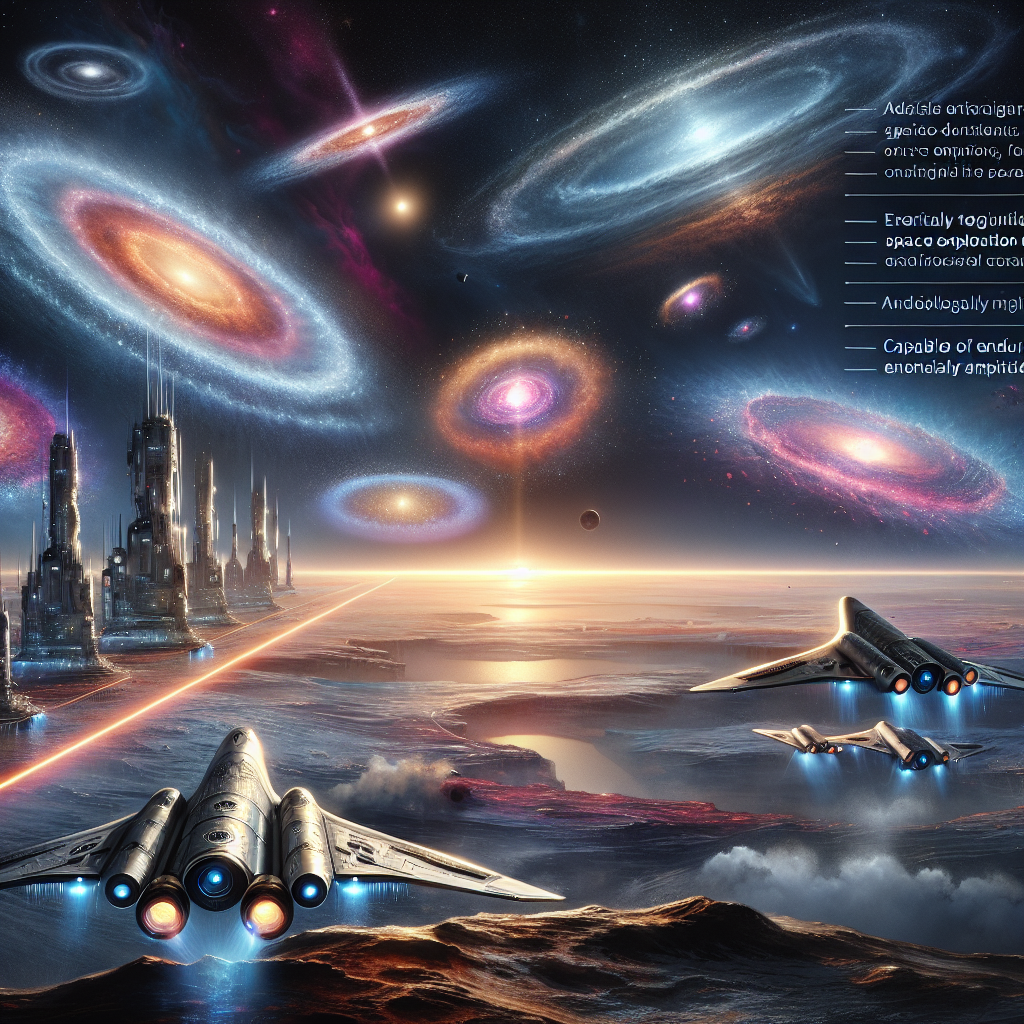
As space exploration moves into a new era, NASA is setting its sights on destinations previously considered too remote or treacherous for traditional spacecraft. The agency has recently outlined its desire for advanced vehicles capable of navigating not just Earth’s orbit, but also the more elusive and extreme paths in deep space. These include orbits that are either highly elliptical, inclined beyond conventional trajectories, or located far beyond the Moon’s reach. It’s a bold move, sparked by a growing dependence on specialized satellites and the increasing pace of interplanetary missions.
To understand the significance of this initiative, it’s important to grasp the complexities of orbital mechanics. Reaching so-called “hard-to-access” orbits requires more than just fuel; it demands precision, power, and innovative propulsion technologies. Traditional spacecraft are optimized for the well-traveled highways of space — low Earth orbit, geosynchronous paths, and direct lunar routes. However, the areas NASA now wants to reach often involve gravitational balances and trajectories that push the limits of current engineering capabilities.
The push for these unconventional orbits isn’t just for the sake of challenge. There are scientific and strategic incentives at play. These hard-to-reach pathways offer unique vantage points for Earth observation, space weather monitoring, and communications infrastructure. In deep space, such routes could enable faster access to planets, asteroids, or even the points between planets where gravitational forces cancel out, making them ideal spots for space stations or telescopes. In effect, NASA is looking to lay down the space equivalent of transcontinental railway lines — only, suspended in gravity.
From a technological standpoint, this goal will likely accelerate the development of new propulsion systems like solar electric engines, nuclear-powered drives, or high-efficiency chemical thrusters. Moreover, NASA’s call for these new spacecraft may inspire a renaissance in spacecraft design, encouraging private aerospace firms and global partners to think outside the conventional payload fairing. With more mobile and adaptable vehicles, orbit-switching could become as routine as altitude adjustments are for airplanes today.
In conclusion, NASA’s vision for reaching the untamed realms of Earth orbit and beyond is more than a technical upgrade — it’s a paradigm shift. By enabling spacecraft to operate in areas once considered too demanding, the agency is expanding the functional boundaries of our presence in space. Whether for science, defense, or exploration, flying into these frontier orbits could unlock discoveries and capabilities that redefine how we inhabit the final frontier.
Leave a Reply