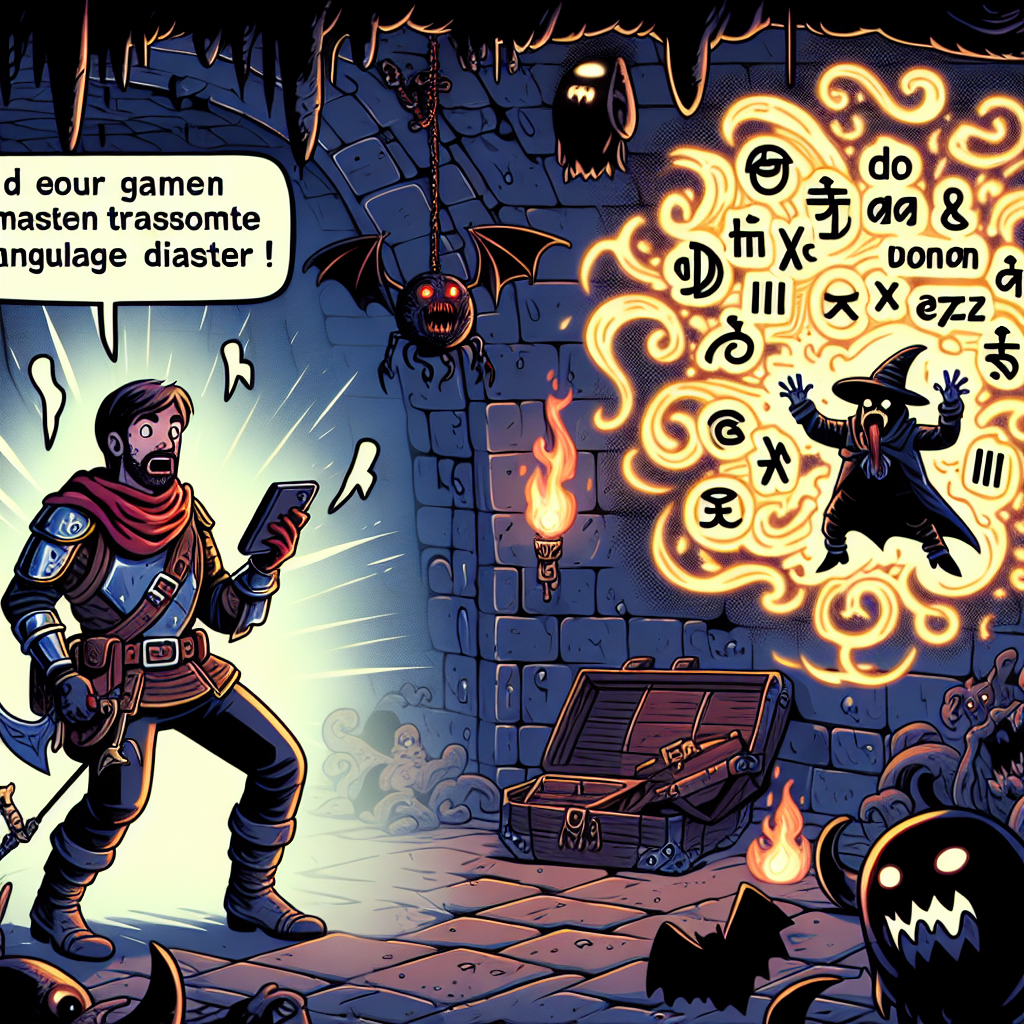
Every so often, the digital world gifts us with a hilarious mishap that reminds us just how tricky language can be—especially when machines are behind the wheel. This week’s viral moment? A game’s Japanese listing on Steam translated its dungeon-crawling identity into something rather unfortunate: ‘Sh***y Dungeon.’ While no developer would greenlight that title on purpose, it appears the slip was due to an automatic translation error that managed to epic-fail its way into a public storefront.
The culprit seems to be a machine translation system that combined literal word-for-word logic with a lack of cultural context. Somewhere between describing a ‘bad’ or ‘cursed’ dungeon and attempting to make the tone edgy or humorous, the algorithm took a misguided turn. This isn’t just a lesson in translation gaffes—it’s a case study in why we still need human oversight when conveying tone, nuance, and context across languages in gaming.
The embarrassing title could have had serious consequences for the game’s image, had it not been so absurd as to be laughable. Instead of anger or confusion, gamers have responded mostly with humor, turning the event into a meme and even generating renewed interest in the title. In an odd way, the mistranslation may have brought the game more attention than a traditional marketing rollout could have.
This isn’t the first time machine translation has spectacularly missed its mark. From restaurant menus to user interfaces, we’ve seen literal translations produce unintentionally profane or nonsensical results. What’s different now is how much online storefronts rely on automation to handle global translations quickly and cheaply. But time and again, these shortcuts have proven that context is king, and no algorithm is fully equipped to parse the intricacies of human language without guidance.
In the end, this amusing mishap serves as a gentle reminder that while technology has revolutionized the way we develop and distribute games globally, there’s still no replacement for the human touch when it comes to culture and tone. A little editorial oversight goes a long way—especially when the difference between ‘challenging dungeon’ and ‘sh***y dungeon’ can mean the difference between ridicule and respect.
Leave a Reply